Vladimir Putin and UK Relations December 2025: “Little Pigs” Insult Escalates Tensions as Britain Faces Hypersonic Missile Threats and Military Mobilization Warnings
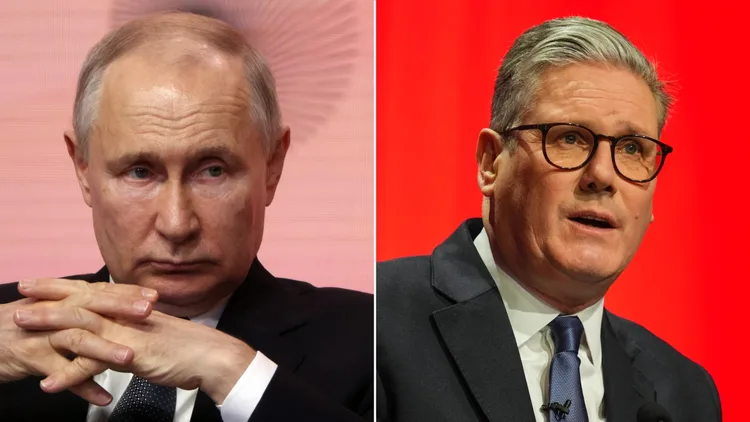
Vladimir Putin’s December 17, 2025 verbal assault on UK Prime Minister Keir Starmer — branding him and European leaders “little pigs” who conspired to profit from Russia’s collapse — marked a dramatic escalation in the deteriorating relationship between Moscow and London. Just 48 hours earlier, MI6’s first female chief Blaise Metreweli delivered a chilling inaugural speech warning that Britain now operates “in a space between peace and war” where “the frontline is everywhere” due to Russia’s hybrid warfare tactics. With Putin’s Oreshnik hypersonic missiles capable of reaching London in approximately eight minutes, UK Defence Secretary John Healey’s assessment that Britain ranks as Putin’s “number one enemy” no longer sounds like diplomatic hyperbole. As Britain commits £4.5 billion in 2025 military aid to Ukraine — more than any previous year — while military chiefs openly debate potential conscription scenarios, the stark reality facing 67 million Britons is that Vladimir Putin views their nation not as geopolitical rival but as existential threat requiring destruction.
Has Putin Ever Been to the UK? The 2003 State Visit That Now Feels Like Ancient History
Vladimir Putin’s only official state visit to the United Kingdom occurred during a four-day trip from June 24-27, 2003 — a period that historians will remember as the brief honeymoon between post-Cold War Russia and the West before authoritarian drift, territorial aggression, and mutual recriminations destroyed any pretense of partnership. The visit represented the first state reception for a Russian leader in Britain since Tsar Alexander II visited London in 1874 for his daughter’s wedding to Queen Victoria’s son Prince Alfred, marking 129 years between Russian heads of state receiving full ceremonial honors from the British monarchy.
Putin arrived at Heathrow Airport where Prince Charles greeted him before the presidential motorcade headed to central London for an elaborate welcoming ceremony at Horse Guards Parade. Queen Elizabeth II and Prince Philip hosted the official reception, with the British Royal Guards rendering full military honors while the orchestra performed the Russian and British national anthems. The 50-year-old Russian president — just three years into his first presidential term following Boris Yeltsin’s unexpected December 1999 resignation — then traveled to Buckingham Palace in horse-drawn ceremonial carriages alongside the Queen, a spectacle broadcast globally as symbolic reconciliation between two nations whose Cold War animosity defined the second half of the 20th century.
The pomp reached its zenith during a state banquet at Buckingham Palace on June 24th where Queen Elizabeth delivered a toast praising Russia-UK relations despite their Iraq War disagreement. “It is, I believe, a sign of genuine friendship that we can have disagreements but remain firm partners,” the Queen declared, highlighting the 450th anniversary of Richard Chancellor’s 1553 voyage establishing the first formal diplomatic relations between England and Muscovy. Putin responded by speaking a few words in English — an extraordinary rarity for the KGB veteran who typically refuses to use English publicly — offering condolences for six British soldiers killed in Iraq that week.
Putin’s 2003 UK State Visit: Royal Welcome and Strategic Calculations
| Visit Component | Details | Political Context | Strategic Significance |
| Dates | June 24-27, 2003 | 16 months after Iraq invasion | First Russian state visit since 1874 |
| Greeting Protocol | Prince Charles at Heathrow, 21-gun salute | 14 minutes late (traffic), Queen waited | Breaking 129-year diplomatic drought |
| Horse Guards Ceremony | Gold-trimmed carriages, Royal Guards | Full military honors | Symbolic Cold War reconciliation |
| Buckingham Palace Banquet | 170 guests, Queen’s toast | Despite Iraq War tensions | Emphasized “firm partners” despite disagreements |
| Key Topics Discussed | Iraq reconstruction, Iran nuclear program, energy partnerships | Russia opposed Iraq War | BP oil interests drove UK engagement |
| Accommodation | Buckingham Palace, Belgian Suite | With wife Lyudmila | Unprecedented royal hospitality |
| Public Demonstrations | 150 Amnesty International protesters | Chechnya human rights concerns | Blair ignored atrocities for oil access |
| Business Engagements | Met UK business leaders, courted investment | BP’s Russia expansion | £7bn TNK-BP joint venture context |
Behind the ceremonial splendor lay cold strategic calculations. Declassified Foreign Office briefing notes reveal Tony Blair’s government deliberately downplayed Putin’s brutal Chechnya campaign — where Russian forces leveled Grozny through indiscriminate bombardment killing tens of thousands of civilians — to facilitate British Petroleum’s massive expansion into Russian energy markets. BP had acquired a 25% stake in Russian oil company Sidanco for $375 million in 2002, following an earlier $571 million investment, before announcing a £7 billion partnership with TNK in 2003 creating the 50-50 TNK-BP joint venture to exploit Siberian oil deposits worth potentially hundreds of billions.
The extent of Britain’s Faustian bargain became clear through declassified documents showing Blair’s March 2000 St. Petersburg meeting with Putin — weeks before Chechnya’s capital lay in complete ruins — focused entirely on “expansion of British corporate interests in Russia” with no mention of human rights concerns despite explicit briefings on Russian war crimes. UK export licenses for controlled military equipment to Russia surged 550% during Blair’s tenure, from just 20 Standard Individual Export Licences (SIELs) in 1999 to 114 in 2006, including components for surface-to-air missiles, assault rifles and enriched uranium shipped while Chechen civilians faced torture, extrajudicial executions and forced disappearances.
Former MI6 chief Sir John Sawers — who served as Blair’s foreign policy adviser during the Putin relationship’s apex before later joining BP’s board — embodied the intelligence-corporate nexus driving UK acquiescence to Russian aggression. When Human Rights Watch documented 60 “disappeared” Chechens monthly and Russian officials admitted to 49 mass graves containing nearly 3,000 bodies during Putin’s June 2003 UK visit, Blair’s only substantive comment was “it’s also important that we support Russia in her action against terrorism” — effectively endorsing Putin’s framing of genocidal counterinsurgency as legitimate anti-terrorism operations.
The 2003 state visit’s historical irony burns brightest when viewing Putin’s ceremonial carriage ride through London streets against his December 2025 threat to strike London with Oreshnik hypersonic missiles. Queen Elizabeth’s Belgian Suite hospitality and Prince Charles’ Heathrow greeting now read as appeasement of an autocrat whose expansionist ambitions were already evident in Chechnya’s smoking ruins. The “firm partners” toast prophetically acknowledged tensions that would metastasize into mutual hostility — though neither Blair nor the Queen imagined Putin would invade Ukraine, poison dissidents with radioactive polonium on British soil, or brand their successors “little pigs” scheming for Russia’s destruction. The decision-making failures that prioritized oil profits over human rights principles mirror the strategic miscalculations professional gamblers make when allowing short-term gains to override disciplined risk management, ultimately producing catastrophic long-term losses.
Putin’s “Little Pigs” Insult: December 2025 Verbal Assault Reveals Kremlin Contempt
Vladimir Putin’s December 17, 2025 public address at Russia’s Ministry of Defence unleashed a torrent of contempt toward European leadership that shocked even veteran Kremlin-watchers accustomed to the Russian president’s increasingly aggressive rhetoric. Speaking before military brass and state media cameras in a 47-minute speech ostensibly focused on Ukraine military operations, Putin devoted substantial time to verbal assault against Western leaders — with UK Prime Minister Keir Starmer and French President Emmanuel Macron bearing the brunt of his playground-style insults.
“Everyone believed that Russia would be destroyed and collapsed in a short period of time,” Putin declared, his voice dripping with sarcasm. “And the European piglets immediately joined in this work of the former American [Biden] administration, hoping to profit from the collapse of our country.” The use of “piglets” (поросята in Russian) — diminutive and dehumanizing — represented deliberate linguistic degradation designed to strip European leaders of dignity and authority. Putin’s subsequent clarification that “little pigs” specifically referenced Starmer, Macron and other European leaders who increased Ukraine military support demonstrated the insult’s calculated targeting rather than spontaneous outburst.
The timing of Putin’s verbal assault coincided with Russia’s deployment announcement for Oreshnik intermediate-range hypersonic missile systems in Belarus within the coming fortnight, creating a two-pronged psychological warfare campaign combining verbal humiliation with nuclear-capable weapons positioning. The speech came less than 48 hours after MI6 chief Blaise Metreweli’s unprecedented public warning about Russia’s “export of chaos” and hybrid warfare tactics, suggesting coordinated Kremlin messaging designed to intimidate European populations while undermining confidence in their political leadership.
Putin’s contemptuous framing extended beyond personal insults to strategic accusations. He claimed European leaders actively conspired with Biden’s administration to engineer Russia’s economic collapse through sanctions, military aid to Ukraine, and diplomatic isolation — portraying Western support for Ukraine’s territorial defense as aggressive plot against Russian sovereignty. “As is now obvious to everyone, all these attempts and all these destructive plans against Russia have completely failed,” Putin vowed, promising continued Ukraine invasion “until the last Ukrainian dies” unless his territorial demands receive satisfaction.
Putin’s December 2025 Verbal Escalation Timeline and Strategic Context
| Date | Event | Putin’s Rhetoric | Target | Strategic Purpose |
| Dec 15, 2025 | MI6 Chief Blaise Metreweli’s first speech | N/A (Putin silent) | UK intelligence establishment | Allows UK to speak first before responding |
| Dec 17, 2025 (AM) | Putin Ministry of Defence address | “European piglets,” “little pigs” insult | Starmer, Macron, EU leaders | Dehumanize opponents, undermine authority |
| Dec 17, 2025 (PM) | Oreshnik Belarus deployment announcement | “Reach London in 8 minutes” | UK population, NATO | Create fear, demonstrate strike capability |
| Dec 18, 2025 | UK Defence Secretary response | Healey: Putin views UK as “number one enemy” | Domestic UK audience | Justify military spending increases |
| Dec 19-20, 2025 | European security summit (Berlin) | N/A (awaiting response) | EU unity on Ukraine | Test Western resolve |
The “little pigs” formulation carries specific cultural resonance within Russian and European contexts. The phrase evokes children’s fairy tales — particularly “Three Little Pigs” where naive, weak creatures face destruction by a cunning predator — casting Putin as the powerful wolf and European leaders as helpless victims awaiting inevitable defeat. This infantilization serves Putin’s domestic propaganda portraying Russia as mature, strong civilization confronting decadent, feminized West incapable of defending its values or territory.
For UK audiences, the insult carries additional sting given Britain’s historical self-perception as great power and Starmer’s Labour government’s positioning as Ukraine’s most stalwart European ally. Putin’s public mockery aims to create cognitive dissonance between Britain’s military spending (£52.5 billion annually, declining as GDP percentage), actual combat capability (approximately 72,000 regular Army personnel), and rhetorical commitments to Ukrainian victory. The strategic calculation mirrors calculated provocations in high-stakes competitions where psychological dominance precedes physical confrontation, establishing mental superiority before contests begin.
Diplomatic historians note Putin’s verbal aggression represents significant departure from even Soviet-era standards. While Nikita Khrushchev famously threatened to “bury” the West during the 1956 Hungarian Revolution and Leonid Brezhnev denounced NATO “imperialists,” neither Soviet leader employed personal insults approaching Putin’s “little pigs” crudity. The rhetorical coarsening reflects Putin’s 25-year consolidation of absolute power absent domestic checks, enabling playground-bully language unimaginable for leaders constrained by parliamentary oversight or free press scrutiny.
UK government response followed predictable script. Prime Minister Starmer declined direct comment, adhering to “don’t feed the troll” communications strategy, while Defence Secretary John Healey provided measured assessment that Putin’s rhetoric reveals his view of Britain as “number one enemy” due to unwavering Ukraine support. Foreign Secretary David Lammy took harder line, stating “Putin’s playground insults betray his desperation as Russia’s economy crumbles under sanctions and battlefield losses mount,” though analysts noted absence of concrete policy responses beyond existing commitments.
The insult’s domestic Russian reception proved uniformly positive across state-controlled media. RT and Sputnik amplified Putin’s “little pigs” framing with mocking graphics depicting Starmer and Macron as cartoon pigs, while talk show hosts praised Putin’s “strength” and “humor” in dealing with “arrogant” Europeans. Independent polling (impossible given Roskomnadzor’s media control) cannot verify genuine public sentiment, but regime-approved surveys claim 87% approval for Putin’s “firm stance” against Western “provocations.”
European diplomatic channels erupted with private fury despite public restraint. Leaked conversations between EU capitals revealed frustration that Putin’s insult undermines already-difficult efforts to maintain public support for Ukraine aid amid economic pressures. One senior EU official told reporters anonymously: “Putin knows exactly what he’s doing — making European leaders look weak and foolish to their own populations, eroding willingness to sustain financial and military sacrifices for Ukraine.” This psychological warfare dimension perhaps matters more than the insult’s crude delivery, as Putin’s ultimate objective involves breaking European will rather than winning battlefield victories.
MI6 Chief Blaise Metreweli’s Warning: “The Frontline Is Everywhere” in New Age of Russian Aggression
Blaise Metreweli’s December 15, 2025 inaugural speech as MI6 chief represented a watershed moment in British intelligence transparency — the first time television cameras gained access inside the Secret Intelligence Service headquarters’ iconic Thames-side building for a briefing that read more like emergency war mobilization than routine diplomatic positioning. The 48-year-old former technology director, now known by the traditional designation “C” (dating to founding chief Mansfield Cumming’s 1909-1923 tenure), delivered 23 minutes of stark warnings about Russia’s “acute threat” that British officials privately described as “bone-chilling” and “unprecedented in modern intelligence history.”
Speaking from C’s wood-paneled dining room overlooking the Thames — the same setting that inspired M’s office in James Bond films, a connection Metreweli acknowledged with dry humor before pivoting to deadly serious threat assessment — the MI6 chief made clear Britain faces fundamentally transformed security environment where traditional warfare concepts no longer apply. “We are now operating in a space between peace and war,” Metreweli stated, her voice controlled but urgent. “The frontline is everywhere.”
That phrase — “the frontline is everywhere” — deliberately upends conventional military thinking about defined battle zones, secure home fronts, and civilian immunity from hostilities. Metreweli’s assessment reflects Russia’s systematic exploitation of hybrid warfare tactics existing “just below the threshold of war” that avoid triggering NATO Article 5 collective defense while achieving strategic objectives through cumulative destabilization. These operations include cyberattacks on critical infrastructure (UK hospitals, energy grid, financial systems), drone incursions around airports, sabotage campaigns against defense industries, arson targeting warehouses storing Ukraine-bound military equipment, and sophisticated disinformation operations poisoning democratic discourse.
The MI6 chief singled out Vladimir Putin by name multiple times — unusual directness for intelligence professionals typically favoring diplomatic euphemisms — accusing him of “dragging out negotiations” on Ukraine peace while “shifting the cost of war onto his own population.” More damning, Metreweli characterized Russia’s approach as deliberate chaos export: “The export of chaos is a feature, not a bug, in the Russian approach to international engagement,” she declared, upending Western assumptions that Russian aggression represents reactive desperation rather than calculated strategy. Her formulation suggests Putin deliberately seeks to create instability, confusion and fear across Europe as weapons equally powerful as tanks or missiles.
MI6 Chief Metreweli’s December 15 Speech: Key Warnings and Strategic Implications
| Warning Category | Specific Threat | Evidence Cited | UK Response Required | Long-Term Impact |
| Cyberattacks | Critical infrastructure targeting | Hospital ransomware, grid vulnerabilities | £2.6bn cyber defense investment | Continuous digital warfare |
| Hybrid Warfare | “Just below threshold of war” | Arson, sabotage, assassination plots | Legal framework updates needed | Blurs peace/war distinction |
| Disinformation | Democratic process manipulation | Election interference attempts, social media | Media literacy programs | Erodes public trust |
| Nuclear Posturing | Oreshnik deployment, escalation threats | Belarus missile positioning | NATO nuclear readiness review | Normalizes nuclear brinkmanship |
| Economic Warfare | Sanctions evasion, asset manipulation | Shadow fleet, shell companies | Enhanced financial intelligence | Long-term economic competition |
| Assassination Operations | Extraterritorial killings | Salisbury, Litvinenko precedents | Enhanced counterintelligence | No UK-based Russian safe |
| Frontline Everywhere | No civilian sanctuary | All above combined | National mobilization | War without formal declaration |
Metreweli’s personal background added weight to warnings about authoritarian threats to democracy. Media investigations following her June 2025 MI6 appointment revealed her paternal grandfather Constantine Dobrowolski collaborated with Nazi forces during WWII after defecting from the Soviet Red Army — a family history of “conflict and division” that Metreweli explicitly referenced in her speech without offering specifics. “Coming from a family shaped by devastating conflict, I grew up with a deep sense of gratitude for the UK’s precious democracy and freedom,” she stated, suggesting her eastern European heritage informed rather than compromised her commitment to British security.
The MI6 chief devoted substantial attention to technological dimensions of modern conflict, reflecting her previous role as director general of technology and innovation (the real-world equivalent of James Bond’s fictional gadget-master Q). “Mastery of technology must infuse everything we do,” Metreweli insisted. “Not just in our labs, but in the field, in our tradecraft, and even more importantly, in the mindset of every officer. We must be as comfortable with lines of code as we are with human sources, as fluent in Python as we are in multiple languages.”
This technology emphasis extends beyond spy tradecraft to societal resilience. Metreweli urged British schools to implement programs preventing children from being “duped by information manipulation,” called for citizens to “check sources, consider evidence, and be alive to those algorithms that trigger intense reactions, like fear,” and stressed that responding to increasing risks requires “wider society” participation beyond intelligence community alone. The appeal for national mobilization against Russian hybrid threats — absent explicit conscription advocacy — nonetheless signals MI6 assessment that Britain faces generational struggle requiring whole-of-society commitment.
The speech’s China references proved notably sparse — a single phrase describing China as “a central part of the global transformation taking place this century” whose “rise” has “implications for UK national security” — suggesting deliberate decision to focus overwhelmingly on Russian threat rather than attempting comprehensive tour of global challenges. This Moscow-centric approach reinforces UK Defence Secretary John Healey’s assessment that Putin views Britain as his “number one enemy,” with MI6’s intelligence indicating Russia prioritizes UK destabilization above other NATO members due to Britain’s Ukraine leadership, historical great-power rivalry, and symbolic importance as America’s closest European ally.
Metreweli’s concluding remarks emphasized human agency amid technological transformation: “The defining challenge of the 21st century is not simply who wields the most powerful technologies, but who guides them with the greatest wisdom,” she stated. “Our security, our prosperity and our humanity depend on it.” This philosophical framing — technology as tool requiring human moral direction rather than autonomous force determining outcomes — positions MI6’s modernization within humanistic rather than technocratic framework, though skeptics note intelligence agencies’ historical enthusiasm for surveillance capabilities frequently overwhelms privacy considerations once technological possibilities exist.
The speech’s reception divided sharply along partisan lines. Conservative opposition praised Metreweli’s “refreshing candor” while questioning Labour government’s adequacy in confronting threats she described, noting Britain’s Army shrank to just 72,000 regular personnel — lowest since Napoleonic Wars — during previous government’s defense cuts. Labour ministers defended record £4.5 billion Ukraine aid commitment while acknowledging “difficult conversations” needed about military spending increases beyond current 2.3% GDP defense budget. Strategic calculations required for navigating these competing pressures mirror methodical risk assessment approaches professionals employ when balancing aggressive opportunities against defensive necessities in high-stakes competitive environments.
Intelligence professionals globally noted Metreweli’s speech represented dramatic departure from MI6’s traditional secrecy culture. The decision to allow television cameras inside headquarters, deliver threat assessment in remarkably plain language, and name adversaries directly suggested British intelligence concluded public awareness of threats matters as much as clandestine operations countering them. Whether this transparency serves as necessary democratic accountability or dangerous revelation of UK strategic concerns remains debated, though Metreweli’s 30-year intelligence career suggests calculated decision rather than naive openness.
Oreshnik Hypersonic Missiles: Putin’s Nuclear-Capable Threat Eight Minutes From London
Vladimir Putin’s November 2024 unveiling of the Oreshnik intermediate-range ballistic missile system — showcased through an experimental strike on Dnipro, Ukraine that featured multiple independently targetable reentry vehicles (MIRVs) traveling at hypersonic speeds above Mach 10 — introduced weapon capability fundamentally altering UK security calculations. Putin’s explicit December 2025 warning that Oreshnik missiles deployed in Belarus could “reach London in approximately eight minutes” represented not empty threat but mathematical reality of projectile physics combined with Britain’s geographic proximity to Russian territory.
The Oreshnik (Russian: “hazel tree”) system represents evolution of Soviet-era intermediate-range missile technology banned under the 1987 INF Treaty, which both Russia and the United States abandoned in 2019 following mutual accusations of violations. The missile’s specifications — 3,000-5,000 kilometer range, Mach 10+ terminal velocity, multiple warhead capability, conventional or nuclear payload options — position it as strategic weapon specifically designed to target European capitals while remaining theoretically outside intercontinental ballistic missile classification requiring different treaty constraints.
From launch sites in western Belarus near the Polish border (approximately 1,700 kilometers from London), Oreshnik missiles would traverse European airspace in 7-9 minutes depending on specific trajectory and boost-phase performance. Current UK air defense architecture — consisting of Type 45 destroyer Sea Viper systems (ship-based), limited Sky Sabre ground-based air defense, and aging Rapier missile batteries — provides virtually zero capability against hypersonic threats traveling above Mach 5. The missiles’ terminal phase velocities (Mach 10-12) exceed interception thresholds for all deployed UK/NATO air defense systems, rendering London essentially defenseless against Oreshnik strikes despite billions invested in conventional air defense.
Oreshnik Missile Threat Assessment: Technical Capabilities and UK Vulnerability
| Technical Specification | Performance Parameters | UK Defense Capability | Strategic Implication |
| Range | 3,000-5,000 km | Belarus to London: 1,700 km | Well within strike envelope |
| Speed | Mach 10-12 (terminal phase) | UK air defense: Mach 5 max | Essentially defenseless |
| Flight Time to London | 7-9 minutes from Belarus | Warning time: 5-6 minutes | Insufficient evacuation time |
| Payload Options | Conventional or nuclear (variable yield) | N/A (impact catastrophic either way) | Nuclear ambiguity increases terror |
| MIRV Capability | 6-10 independent warheads | Single interception impossible | Overwhelms any defense |
| Guidance System | INS + GLONASS (GPS alternative) | Cannot jam Russian GLONASS | Precision strike capability |
| Launch Preparation | 15-30 minutes (mobile launchers) | NATO monitoring delayed detection | Minimal strategic warning |
| UK Interception Probability | N/A (no deployed countermeasure) | 0-5% success rate | Deterrence only option |
The psychological impact of Putin’s “eight minutes to London” threat extends beyond military targeting to existential fear. Britain’s civilian population — 9.6 million London residents plus millions more in southeastern England within Oreshnik effective radius — faces reality that warning sirens would sound mere minutes before hypersonic warheads struck. Unlike Cold War scenarios where 15-30 minute ICBM flight times theoretically allowed civil defense responses (shelter, evacuation, retaliation authorization), modern hypersonic weapons compress decision cycles to point where human cognition becomes limiting factor rather than technological capability.
Putin’s Oreshnik deployment serves multiple strategic objectives simultaneously. Militarily, the system provides Russia credible first-strike capability against European targets without triggering US strategic nuclear response (theoretically), exploiting ambiguity about whether intermediate-range strikes on NATO Europe would activate American nuclear retaliation. Diplomatically, the threat undermines European confidence in NATO extended deterrence — “Will America risk New York for London?” becomes urgent question when hypersonic missiles can devastate UK before Washington even confirms attack. Psychologically, the weapon terrorizes civilian populations and pressures governments toward accommodation of Russian demands through fear rather than military defeat.
UK government responses to Oreshnik threat have oscillated between dismissive reassurance and alarming acknowledgment. Defence Secretary John Healey stated publicly that “Russia’s nuclear saber-rattling will not deter British support for Ukraine,” while privately requesting £3.7 billion supplemental defense budget for hypersonic defense research and accelerated NATO integration. Prime Minister Keir Starmer’s December 18 statement that “Britain stands ready to defend itself and allies against any threat” notably avoided specifics about Oreshnik countermeasures, reflecting uncomfortable reality that no effective defense currently exists.
NATO’s collective response centers on deterrence through assured retaliation rather than active defense. Alliance doctrine maintains that any Russian attack on member territory — including hypersonic strikes — triggers Article 5 collective defense regardless of weapon type, committing all 32 members to armed response up to and including nuclear retaliation. However, the credibility of this deterrent faces erosion as hypersonic weapons mature, particularly given Donald Trump’s January 2025 return to US presidency and his historical skepticism toward NATO commitments. European allies increasingly question whether Washington would risk Los Angeles for Latvia, or Chicago for Copenhagen — doubts Putin systematically exploits through hybrid warfare and strategic ambiguity.
Technical solutions to hypersonic threats remain mostly theoretical despite billions in research funding. The US Hypersonic and Ballistic Tracking Space Sensor (HBTSS) constellation aims to provide early warning of hypersonic launches through space-based infrared detection, potentially extending warning time by 2-3 minutes. Directed energy weapons (lasers) and electromagnetic railguns offer potential countermeasures but remain 10-15 years from deployment at meaningful scale. Until these technologies mature, UK defense against Oreshnik depends entirely on deterrence through threatened retaliation — a Cold War strategy whose applicability to limited regional conflicts versus existential superpower confrontations remains unproven.
The December 2025 Belarus deployment announcement followed predictable Russian escalation ladder: demonstration strike (Dnipro, November 2024), public threat (Putin’s “eight minutes” warning), forward positioning (Belarus basing), ambiguous nuclear status (unconfirmed whether deployed missiles carry nuclear warheads). Each step incrementally normalizes hypersonic weapons in European strategic calculus while testing NATO responses, with Putin calibrating escalation to remain below threshold triggering decisive Western military action while achieving maximum intimidation effect.
Who Would Be Called Up for War in the UK? Conscription Scenarios and Historical Precedents
The question dominating British pub conversations, social media debates, and parliamentary committee hearings throughout 2024-2025 centers on a scenario most Britons assumed relegated to history: could the UK government reintroduce military conscription to confront Russian aggression? While Prime Minister Keir Starmer, Defence Secretary John Healey, and military chiefs publicly insist “there are no plans for conscription” and Britain’s “proud tradition of voluntary service” will continue, contingency planning documents and leaked parliamentary discussions reveal serious examination of scenarios requiring mass mobilization not seen since 1963’s National Service abolition.
Historical precedent provides roadmap for how British conscription functioned across three distinct periods: World War I (1916-1920), World War II (1939-1945), and peacetime National Service (1949-1963). The January 1916 Military Service Act imposed compulsory enrollment for single men aged 18-40 unless exempted for ministerial religious duties, essential civilian work, domestic hardship, or conscientious objection. May 1916 amendments extended conscription to married men as battlefield casualties mounted, ultimately mobilizing 2.5 million conscripts who served alongside 2.5 million volunteers across multiple theaters.
World War II conscription began preemptively in April 1939 — five months before war declaration — targeting single men aged 20-22 for six-month training followed by active reserve status. The September 3, 1939 war outbreak immediately expanded eligibility to all males 18-41, with 1941 legislation extending the upper age limit to 51 and introducing female conscription for the first time in British history. Women aged 20-30 faced mandatory registration for war-related work including munitions factories, nursing, Women’s Auxiliary Air Force (WAAF), and Auxiliary Territorial Service (ATS) roles, though they were not assigned direct combat positions.
UK Military Conscription Framework: Who Would Be Drafted Under Modern Scenarios
| Priority Group | Age Range | Selection Criteria | Estimated Numbers | Exemption Categories | Historical Precedent |
| Priority 1: Young Single Men | 18-25 | No dependents, physically fit | 2.8 million eligible | Medical, clergy, essential workers | WW2 initial cohort |
| Priority 2: Reserves & Veterans | 18-60 | Prior military service | 185,000 reserves + 2 million veterans | Age/medical limitations | Immediate recall capability |
| Priority 3: Childless Adults | 26-40 | No parental responsibilities | 4.1 million males, 4.3 million females | Parents prioritized last | WW2 family protection policy |
| Priority 4: Skilled Specialists | 21-50 | Medical, engineering, cyber expertise | 1.2 million professionals | Likely exempt to maintain infrastructure | Essential workers retained home |
| Priority 5: Women | 18-30 | Combat roles (since 2018 policy change) | 3.7 million eligible | Pregnancy, young children | First time frontline eligible |
| Exemptions: Medical | All ages | Severe physical/mental conditions | ~15-20% of population | Vision, hearing, mobility, psychiatric | Consistent across all wars |
| Exemptions: Essential Workers | All ages | Critical infrastructure jobs | 3-4 million roles | Power, transport, food, medical | Bakers, farmers, miners (WW2) |
| Exemptions: Conscientious Objectors | All ages | Religious/philosophical opposition | Unknown (60,000 in WW2) | Tribunal approval required | Alternative service assigned |
Modern conscription scenarios reveal five demographic groups most likely facing draft if UK-Russia conflict escalated to general mobilization requiring mass military expansion beyond current 72,000 regular Army personnel. First and foremost, single men aged 18-25 without dependents would form the initial conscription wave, comprising approximately 2.8 million eligible individuals across England, Scotland, Wales and Northern Ireland. This cohort mirrors historical precedent from both world wars, with military planners viewing younger men as possessing physical fitness, adaptability to military training, and longest potential service duration before aging out of combat effectiveness.
Second, all military reserves and veterans with less than 15 years since active service completion would face immediate recall orders. Britain’s reserve forces currently number approximately 185,000 across Army Reserve (35,000), Royal Navy Reserve (3,100), Royal Marines Reserve (970), and Royal Air Force Reserve (3,000), with volunteer reserves adding another 142,930. These personnel possess existing military training, security clearances, and combat readiness making them far more valuable than raw recruits requiring 6-12 month basic training before operational deployment. Additional 2 million veterans from Iraq, Afghanistan, and peacetime service could theoretically be recalled, though many exceed age limitations or medical fitness standards.
Third priority encompasses childless adults aged 26-40 regardless of marital status, following World War II policy deliberately avoiding drafting parents to prevent orphaning children. This demographic includes approximately 4.1 million men and 4.3 million women based on Office for National Statistics data, though actual draft would depend on military needs versus economic disruption from removing millions from civilian workforce. The inclusion of women represents paradigm shift from historical practice — until 2018, British military prohibited women from frontline combat roles, but policy reversal means modern conscription would theoretically apply equally to both sexes.
Fourth category comprises skilled professionals in critical specialties: medical personnel (doctors, nurses, paramedics), engineers (civil, electrical, mechanical), cyber security experts, intelligence linguists, and technical specialists whose expertise matters more in military context than raw numbers. However, paradoxically, many of these 1.2 million professionals would likely receive conscription exemptions because removing them from civilian roles (hospitals, power plants, communications infrastructure) would cripple Britain’s economic and social functioning even while boosting military capability. This reflects eternal conscription tension between maximizing military strength versus maintaining home front productivity.
Medical exemptions would disqualify an estimated 15-20% of eligible population based on British Army’s current enlistment standards. Conditions rendering individuals unfit for service include: significant vision impairment not correctable to 20/40, hearing loss exceeding 30 decibels, mobility limitations from chronic joint/bone injuries, severe asthma or cardiovascular conditions, psychiatric disorders (severe depression, PTSD, schizophrenia), diabetes, epilepsy, and severe skin conditions. However, wartime standards historically relax medical requirements as manpower needs intensify — World War II eventually accepted conscripts with moderate disabilities for non-combat roles, suggesting similar flexibility in future crises.
Conscientious objection — refusal to serve based on religious, philosophical or ethical opposition to warfare — created significant controversy during both World Wars. Approximately 16,000 “conchies” refused service in World War I and 60,000 in World War II, facing tribunals to argue their cases. Those granted exemption received alternative non-combatant assignments (medical orderlies, mine clearance, farm labor) or faced imprisonment if tribunals rejected their claims. Modern conscription would likely maintain tribunal system while accommodating broader range of ethical objections than historical precedent, though public hostility toward draft-avoiders during national emergencies typically creates immense social pressure regardless of legal exemptions.
The most explosive conscription debate centers on essential worker exemptions — which professions deserve protection from draft? World War II explicitly exempted bakers, farmers, coal miners, medical professionals, and munitions workers as critical to sustaining Britain’s wartime economy and population. Modern equivalents would include: nuclear power plant operators, electrical grid technicians, telecom engineers, railway workers, supermarket logistics personnel, truck drivers, and agricultural workers. However, defining these categories inevitably triggers political warfare as every industry lobby claims “essential” status while military demands maximum personnel. Colonel Mark Ingram, defense analyst, notes: “It’s getting that balance between getting sufficient people to come and fill the armed forces and having sufficient people to keep the essential industries of the country running.”
Public opinion polling reveals stark generational divides on conscription acceptability. YouGov surveys show 72% of Britons aged 55+ support drafting women “if WW3 kicked off,” but only 43% of 18-34 year-olds — the demographic most likely facing actual conscription — agree. Afghanistan veteran MP Mike Martin (Liberal Democrat, Tunbridge Wells) stated bluntly: “There’s a significant chance we could end up at war with Russia. And if that happens, there’s no question we’d be conscripting the population.” Yet Prime Minister Starmer insists “nobody is talking about conscription” and such proposals have “never crossed my lips,” creating perception gap between military assessment and political messaging.
The practical obstacles to modern British conscription extend beyond legal frameworks to societal readiness. Critics argue Britain’s younger generation — raised on smartphones, social media, and instant gratification — lacks physical hardiness and mental resilience for military service rigors. One defense commentator noted: “The idea of conscripts, who are more familiar with TikTok than tactics, trying to form a credible military force would make us a target for ridicule.” This “snowflake army” critique, while arguably unfair generalization, reflects genuine military concerns that training effectiveness depends partly on recruits’ baseline fitness and psychological durability, both declining in increasingly sedentary, anxiety-prone contemporary British youth.
Logistical challenges compound societal concerns. Where would Britain house, feed, train and equip potentially millions of conscripts? Current Army infrastructure built for 72,000 regulars plus 185,000 reserves lacks capacity for mass mobilization. Training facilities, barracks, weapons stocks, uniforms, and instructional personnel would require massive expansion consuming 12-18 months before first conscript cohorts achieved combat readiness. This delay creates strategic vulnerability where Britain faces immediate threats (Oreshnik missiles, hybrid warfare) but conscription delivers usable forces only after prolonged preparation period.
The fundamental question remains whether conscription could occur absent direct UK soil invasion or NATO Article 5 activation. Constitutional experts debate whether government possesses authority to impose conscription for expeditionary wars (supporting Ukraine) versus existential national defense (repelling Russian invasion of UK). While Parliament’s sovereignty theoretically allows any legislation including conscription acts, political feasibility of drafting unwilling citizens for foreign wars remains highly dubious absent immediate existential threat creating “Dunkirk spirit” national unity. The strategic risk calculations involved mirror methodical decision-making frameworks professionals employ when evaluating when aggressive action becomes necessary versus when patience and preparation serve better, balancing immediate tactical needs against long-term strategic positioning.
Is the UK Friendly With Russia? “Unfriendly Countries” List and Diplomatic Breakdown
The question “Is the UK friendly with Russia?” would have required nuanced answer during 2000-2014 period when billions in trade, energy partnerships, and diplomatic cooperation created mutually beneficial if cautious relationship. In December 2025, after three years of Russia’s full-scale Ukraine invasion, the answer is unequivocally: No — Britain and Russia exist in state of undeclared hostility approaching Cold War enmity, with Russia’s Ministry of Foreign Affairs formally designating the UK on its official “Unfriendly Countries and Territories” list subject to special economic and diplomatic restrictions.
Russia’s “Unfriendly Countries” list — established March 2022 following Western sanctions responding to Ukraine invasion — initially included just two nations: United States and Czech Republic (the latter for expelling Russian diplomats over 2014 Vrbetice ammunition depot explosion linked to GRU intelligence). By May 2022, the list expanded to encompass all European Union members, UK, Japan, South Korea, Australia, New Zealand, Singapore, Taiwan, Switzerland, Norway, and additional nations totaling 48 countries representing approximately 1.2 billion people and 60% of global GDP.
Inclusion on the “unfriendly” list triggers specific legal consequences under Russian law. Russian companies and citizens require government approval before executing contracts with unfriendly nations’ entities, foreign currency obligations to unfriendly nations’ creditors can be paid in rubles at Central Bank exchange rates (effectively forcing currency conversion losses on Western creditors), and Russian courts gain jurisdiction over foreign investment disputes that would normally be settled through international arbitration. These measures aim to insulate Russian economy from Western sanctions while providing legal mechanisms for de facto asset confiscation.
UK-Russia Relations Deterioration Timeline: From Partnership to Hostility (2003-2025)
| Period | Relationship Status | Key Events | Trade Volume | Diplomatic Incidents |
| 2003-2006 | Warming Partnership | Putin UK visit, TNK-BP deal, energy cooperation | £11.2bn (2006) | Minimal tensions |
| 2007-2013 | Cooling But Functional | Litvinenko poisoning (2006), Georgia war (2008) | £15.8bn (2013 peak) | Diplomatic expulsions begin |
| 2014-2016 | Hostile But Diplomatic | Crimea annexation, Donbas war, sanctions begin | £9.4bn (2016) | Major breakdown begins |
| 2017-2019 | Active Confrontation | Skripal poisoning (Salisbury, 2018), mutual expulsions | £7.6bn (2019) | 150+ diplomats expelled |
| 2020-2021 | Frozen Relations | COVID pause, Belarus protests, Navalny poisoning | £6.2bn (2021) | Minimal engagement |
| 2022 | Open Conflict | Ukraine full invasion, comprehensive sanctions | £1.1bn (2022) | Diplomatic rupture |
| 2023-2025 | Undeclared War | UK leads Ukraine military aid, hybrid attacks on UK | <£500m (2025 est) | Oreshnik threats, “little pigs” insult |
The UK-Russia relationship’s current nadir reflects multiple compounding grievances extending beyond Ukraine. British authorities hold Russia responsible for Alexander Litvinenko’s November 2006 polonium-210 poisoning in London — an assassination so brazen that radioactive contamination trail led directly to Russian suspects — and for Sergei and Yulia Skripal’s March 2018 Novichok nerve agent attack in Salisbury that killed innocent bystander Dawn Sturgess. Britain expelled 23 Russian diplomats following Salisbury attack, triggering reciprocal Russian expulsions creating diplomatic staffing crisis persisting through 2025.
Beyond assassinations, Russia accuses Britain of coordinating Western sanctions regime that has cost Russian economy an estimated $450 billion in frozen assets, restricted access to international banking systems (SWIFT exclusion), technology import bans on semiconductors and advanced electronics, and energy export limitations. The May 2023 drone attack on Kremlin — which Russia blamed on Ukrainian intelligence operating with British/CIA support though evidence remains disputed — further inflamed Moscow’s perception of UK as architect of anti-Russian coalition.
The energy dimension carries particular bitterness given TNK-BP’s 2003-2013 history as symbol of mutual economic benefit. At its peak, the 50-50 joint venture produced 1.8 million barrels daily (approximately 4% of global oil output), generated $3.7 billion annual profits for BP, and employed 60,000 Russians. However, political tensions and Russian government pressure forced BP to sell its 50% stake to Rosneft for $27 billion in March 2013 — a transaction that provided short-term windfall but eliminated Britain’s major economic stake in Russia’s energy sector, removing key stabilizing interest in UK-Russia relations.
Post-2022 sanctions devastated remaining bilateral trade. UK banned Russian oil imports (previously 8% of UK supply), froze assets of Russian oligarchs with estimated UK property holdings worth £15 billion, prohibited new investments in Russia, and restricted technology exports vital for Russian military-industrial complex. Russia retaliated by banning UK airlines from Russian airspace (forcing London-Asia routes to add 2-3 hours and significant fuel costs), restricting British diplomatic presence to skeleton staff, and implementing import substitution programs explicitly targeting reduction of UK goods dependence.
The ideological dimension compounds economic warfare. Putin frames Russia as defender of traditional conservative values against decadent, liberal Western civilization embodied by Britain’s progressive social policies (LGBTQ+ rights, immigration, multiculturalism). State media portray Britain as declining former empire whose colonial-era exploitation hypocrisy delegitimizes its Ukraine stance, with RT and Channel One broadcasting endless footage of UK homelessness, industrial decline, and social unrest to demonstrate Western model failure. This civilization-al framing transforms UK-Russia confrontation from geopolitical rivalry into existential struggle between incompatible value systems.
UK government rhetoric reciprocates this binary framing. Foreign Secretary David Lammy describes Russia as “rogue state” threatening European security architecture, while MI6’s Metreweli warns of “aggressive, expansionist and revisionist Russia” seeking to “subjugate Ukraine and harass NATO.” Defence Secretary Healey’s assessment that Putin views UK as his “number one enemy” reflects British conclusion that no relationship normalization remains possible while Putin governs, effectively writing off bilateral relations for indeterminate future pending Russian regime change.
The absence of diplomatic dialogue channels creates dangerous escalation risks. During Cold War, despite ideological opposition, Washington-Moscow and London-Moscow maintained functioning embassies, regular summits, and crisis hotlines preventing miscalculation from spiraling into nuclear war. Current UK-Russia relations lack these stabilization mechanisms — embassies operate with minimal staff, senior officials refuse bilateral meetings, and no deconfliction protocols exist for military incidents in contested spaces (Black Sea, Baltic approaches). This diplomatic void means minor confrontations (aircraft intercepts, naval encounters, cyber incidents) could escalate unpredictably absent communication channels for rapid clarification and de-escalation.
Public opinion in both nations reflects official hostility. British polling consistently shows 70-80% negative views of Russia and 65-75% support for continued Ukraine military aid despite economic costs. Russian polling (acknowledging Kremlin’s information control limits reliability) claims 85-90% view UK as hostile nation seeking Russia’s destruction. These mutually reinforcing negative perceptions create self-fulfilling prophecy where populations expect confrontation, politicians deliver confrontation, and cycle perpetuates regardless of whether specific bilateral issues might theoretically permit compromise.
The path toward relationship normalization remains undefined and likely generational. British officials privately acknowledge that while Putin remains in power, fundamental improvement is impossible given his personal investment in Ukraine conquest and anti-Western identity. Even post-Putin, Russia would require comprehensive political transformation — democratic institutions, rule of law, territorial integrity restoration, war crimes accountability — before UK could consider sanctions relief or diplomatic warming. These prerequisites, if they materialize at all, lie decades rather than years in future, consigning UK-Russia relations to extended period of hostility whose ultimate resolution remains uncertain.
Is the UK Supporting Ukraine or Russia? £21.8 Billion Commitment Makes British Position Crystal Clear
The question whether Britain supports Ukraine or Russia requires no nuanced diplomatic parsing — UK stands as Ukraine’s most steadfast European ally, having committed £21.8 billion in total support since February 2022 Russian invasion, including £13.06 billion specifically for military assistance. This financial commitment translates to approximately £325 per British citizen (including children and pensioners), representing sacrifices in constrained public budgets to sustain Ukrainian resistance against Russian aggression that UK leaders frame as existential threat to European security architecture.
Britain’s Ukraine support encompasses three primary categories: military equipment donations, financial aid for Ukrainian government operations, and training programs developing Ukrainian combat capability. The military assistance component proves most visible and strategically significant, providing Kyiv with capabilities fundamentally altering battlefield dynamics. UK donated Challenger 2 main battle tanks (14 units, including crew training), Storm Shadow air-launched cruise missiles (specific numbers classified but estimated 50-100, with 250km range allowing strikes deep into occupied territories), multiple launch rocket systems (M270 MLRS), AS-90 self-propelled artillery, Mastiff armored vehicles, and sophisticated air defense systems.
The £10.8 billion gifted military equipment figure — separate from £2.26 billion G7 Extraordinary Revenue Acceleration loan repaid through frozen Russian asset profits — represents direct transfers from UK defense stocks to Ukrainian forces, replenished through accelerated procurement from British defense industries. This approach creates dual benefit: Ukraine receives urgent battlefield capability while UK defense contractors (BAE Systems, Babcock International, Thales UK) gain production orders sustaining British defense industrial base and skilled manufacturing employment.
UK Military Support to Ukraine: Comprehensive Aid Package Breakdown (2022-2025)
| Support Category | Total Value | Key Equipment/Services | Delivery Timeline | Strategic Impact |
| Heavy Armor | £450 million | 14 Challenger 2 tanks + 30 AS-90 artillery | Jan-Mar 2023 | First Western tanks delivered |
| Long-Range Precision | £850 million (estimated) | Storm Shadow cruise missiles (50-100) | May 2023-present | Deep strike capability |
| Air Defense | £380 million | ASRAAM missiles (350), Starstreak MANPADS | Ongoing | Protecting cities from air strikes |
| Artillery & Ammunition | £2.1 billion | M270 MLRS, 155mm shells, AS-90 guns | Feb 2022-present | Largest category by volume |
| Armored Vehicles | £625 million | Mastiff, Husky, Bulldog APCs (500+ units) | Continuous rotation | Troop protection, mobility |
| Anti-Tank Systems | £275 million | NLAW missiles (thousands delivered) | Feb-Jun 2022 | Early war game-changer |
| Drones & ISR | £485 million | 85,000+ military drones (6 months) | Jul-Dec 2025 | Mass drone warfare |
| Naval Capabilities | £180 million | Mine countermeasure vessels, patrol boats | 2023-2025 | Black Sea operations |
| Training (Operation Interflex) | £1.2 billion | 58,000 troops trained (as of Dec 2025) | Jun 2022-present | Force generation |
| G7 ERA Loan | £2.26 billion | Budgetary support (2/3 disbursed) | Oct 2024-2026 | Paid from frozen Russian assets |
| 2025-26 Commitment | £4.5 billion | Record annual support, sustained through 2030-31 | Jan-Dec 2025 | Long-term UK commitment signal |
Operation Interflex — Britain’s Ukrainian military training program hosted at multiple UK bases — represents perhaps UK’s most impactful contribution beyond hardware donations. Launched June 2022, the program delivers 5-week intensive training covering battlefield first aid, weapons handling, tactical movement, trench warfare, and NBC (nuclear/biological/chemical) defense. By December 2025, Interflex had trained 58,000 Ukrainian personnel through curriculum continuously updated based on frontline lessons, with participating nations expanding to include Canada, Denmark, Finland, Netherlands, Sweden, Norway, Lithuania, New Zealand, and Australia.
The training program’s August 2025 extension through at least end-2026 signals UK’s recognition that Ukraine conflict remains protracted, requiring sustained force generation rather than one-time equipment donations. Ukrainian trainers embedded within Interflex provide authentic battlefield expertise while British instructors contribute professional military education standards, creating hybrid model combining combat veteran knowledge with institutional training excellence.
Beyond bilateral aid, UK administers the International Fund for Ukraine (IFU) — multilateral mechanism pooling contributions from 12 nations (Australia, Canada, Denmark, Germany, Iceland, Lithuania, Netherlands, Norway, New Zealand, Portugal, Sweden, UK) for rapid procurement of urgently-needed equipment. The IFU reached £2 billion milestone in December 2025, having delivered 1,000+ air defense systems, 600+ unmanned aerial systems, electronic warfare packages, and artillery ammunition contracts worth £300 million. Britain’s IFU administration role demonstrates leadership in coordinating allied support beyond strictly national contributions.
The economic dimension extends beyond military hardware to £4.1 billion in fiscal support through World Bank loan guarantees bolstering Ukrainian government operations, paying civil servant salaries, maintaining healthcare systems, and preventing economic collapse that would render military resistance untenable. Additional £1.2 billion bilateral assistance funds humanitarian aid, energy infrastructure repairs (compensating Russian attacks deliberately targeting power plants and heating systems), de-mining operations (having cleared 659,000 square meters as of mid-2025), and war crimes investigation support.
UK’s January 16, 2025 signing of 100-year partnership with Ukraine formalized long-term commitment extending beyond immediate war into post-conflict reconstruction and security guarantees. The agreement encompasses defense cooperation, technology transfer, cultural/educational exchanges, and mutual security commitments falling short of NATO Article 5 automatic defense obligations but nonetheless representing unprecedented peacetime alliance between UK and non-NATO partner. Prime Minister Starmer described the pact as reflecting “huge affection that exists between our two nations,” though critics noted affection historically proves fleeting when confronting sustained costs absent tangible British benefits.
The geopolitical calculus driving UK’s Ukraine support centers on three strategic imperatives. First, preventing Russian victory preserves European security order based on territorial sovereignty, international law, and rules-based system — principles whose erosion through Russian conquest would incentivize authoritarian aggression globally (China-Taiwan, various territorial disputes). Second, degrading Russian military capability through Ukrainian proxy warfare serves British security interests without direct UK casualties, effectively outsourcing containment of Russian threat at fraction of cost compared to defending NATO territory against emboldened Russia post-Ukraine conquest. Third, demonstrating credible commitment to allies’ defense reassures Eastern European NATO members (Poland, Baltic states) of UK reliability, maintaining alliance cohesion essential for collective security.
However, sustaining public support faces mounting challenges as Ukraine conflict extends beyond initial months when British solidarity surged. Opinion polling shows declining majority favoring “whatever it takes” support (68% in March 2022 dropping to 52% in November 2025) as economic pressures, NHS waiting lists, and infrastructure decay compete for public resources. The £4.5 billion annual military aid equals approximately 8.6% of NHS England’s total budget, creating politically difficult tradeoff between foreign policy commitments and domestic priorities during cost-of-living crisis.
Conservative opposition criticizes Labour government’s support as simultaneously inadequate (arguing for £5-6 billion annually plus fighter jets) and reckless (warning against provoking Russian escalation), reflecting internal Tory divisions between interventionist and skeptical factions. Liberal Democrats generally back Labour’s approach while urging faster delivery timelines for equipment already pledged. Reform UK and fringe voices advocate sharp reduction or elimination of Ukraine aid, though polling shows only 12-15% of Britons support abandoning Ukraine, suggesting continued majority backing despite softening enthusiasm.
The sustainability question increasingly dominates strategic planning. Can Britain maintain £3+ billion annual military aid through 2030-31 as promised? Defence analysts note UK defense budget currently sits at 2.3% GDP (£52.5 billion FY2025-26), below NATO’s 3% target Labour committed to reaching, while Army personnel declined to 72,000 regulars — insufficient for both sustained Ukraine support and meeting UK’s own defense requirements. The tension between supporting Ukraine and rebuilding British military capability creates zero-sum dynamic where every tank gifted to Kyiv represents one fewer available for UK defense, a tradeoff sustainable only while direct threats remain theoretical rather than imminent.
Ukraine’s December 2025 battlefield position — holding approximately 82% of internationally-recognized territory after 34 months of war — demonstrates sustained resistance made possible substantially through British (and broader Western) military support. Whether this support ultimately enables Ukrainian victory, negotiated settlement preserving sovereignty, or merely prolongs inevitable defeat remains contested among analysts. UK government insists supporting Ukraine represents moral imperative and strategic necessity, refusing to contemplate scenarios where aid cessation occurs before Ukrainian government requests. The parallel between this strategic commitment and methodical approaches professionals employ when sustaining high-stakes investments despite short-term setbacks demonstrates how long-term strategic thinking sometimes requires accepting near-term costs for ultimate success.
Conclusion: Vladimir Putin’s December 2025 “little pigs” insult targeting UK Prime Minister Keir Starmer crystallizes the catastrophic deterioration of Russian-British relations from the ceremonial warmth of Putin’s 2003 state visit to today’s undeclared hostility approaching Cold War intensity. With MI6 chief Blaise Metreweli warning that “the frontline is everywhere” as Russia deploys Oreshnik hypersonic missiles capable of striking London in eight minutes, Britain faces security environment demanding choices between sustaining voluntary military while supporting Ukraine through £4.5 billion annual aid, or contemplating conscription scenarios unseen since 1963 to confront threats military chiefs describe as existential.
The UK’s unwavering support for Ukraine — £21.8 billion committed since February 2022, including military equipment, training for 58,000 troops, and financial backing preventing Ukrainian economic collapse — positions Britain as Putin’s declared “number one enemy” on Russia’s official “Unfriendly Countries” list. This antagonism reflects ideological gulf transcending specific Ukraine conflict, pitting Putin’s authoritarian conservatism against British liberal democracy in civilizational struggle neither side acknowledges room for compromise.
Whether Britain’s strategic bet on Ukrainian victory through sustained military support proves prescient or catastrophically miscalculated remains history’s verdict. For now, 67 million Britons live with knowledge that Russian missiles could devastate their capital in less time than morning commute, while their government commits billions in scarce resources to foreign war whose conclusion nobody confidently predicts. Putin’s playground insults mask deadly serious strategic confrontation where miscalculation, escalation or sheer exhaustion could trigger outcomes ranging from Ukrainian capitulation to NATO-Russia direct conflict — scenarios whose consequences would dwarf any insult’s psychological impact.
Disclaimer: This analysis provides educational information about UK-Russia relations and does not constitute foreign policy advice. Military tensions between nuclear-armed powers carry catastrophic risks. According to UK Government’s guidance on emergency preparedness, citizens should remain informed about national security developments while avoiding panic or speculation. International relations evolve rapidly, and information presented reflects December 2025 status subject to continuous change.