Ces 2026 Revolutionizes Tech Landscape: AI, Robotics and Next-Gen Computing Dominate Las Vegas Showcase
TECHNOLOGY & INNOVATION | INDUSTRY ANALYSIS
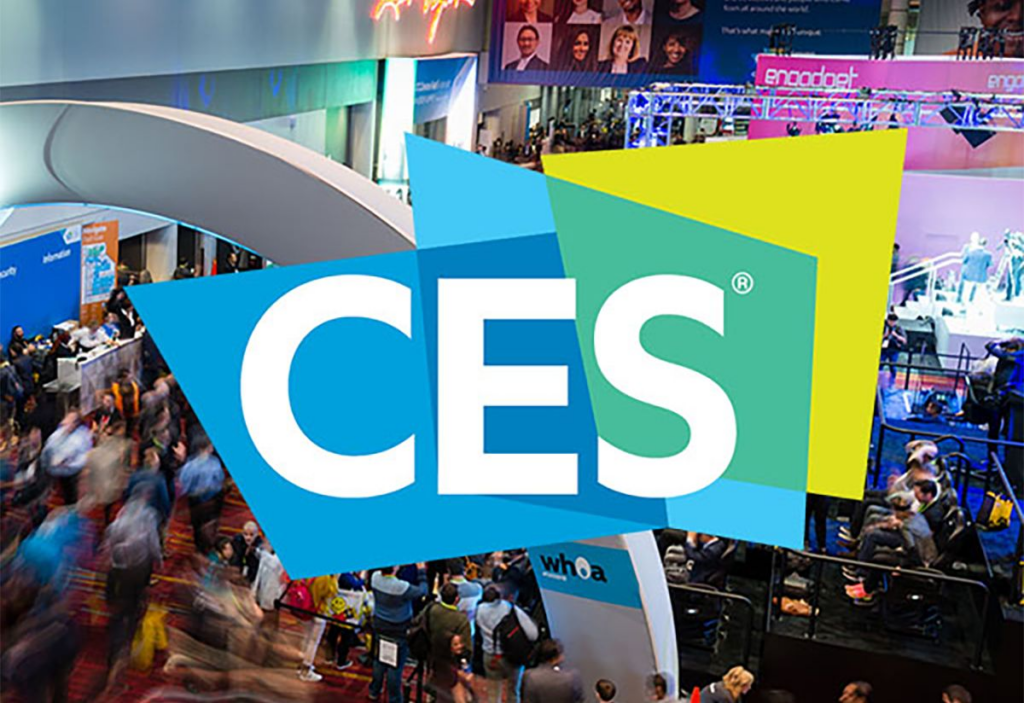
The Consumer Electronics Show 2026 concluded Thursday in Las Vegas, delivering a transformative vision of technology’s near future dominated by artificial intelligence integration across virtually every product category, breakthrough robotics demonstrations, and next-generation computing platforms promising to reshape personal and enterprise technology.
With over 140,000 attendees across four days of exhibitions, press conferences, and product demonstrations, CES 2026 represented the technology industry’s most ambitious showcase since the pre-pandemic era. The event’s overwhelming emphasis on AI-powered devices, humanoid robots, and revolutionary chip architectures signals fundamental shifts in how humans will interact with technology throughout the remainder of the decade.
NVIDIA’s Vera Rubin Platform Steals Spotlight
NVIDIA CEO Jensen Huang delivered CES 2026’s marquee keynote presentation, unveiling the company’s Vera Rubin AI supercomputing platform—a system promising five times the computational power of previous generation architectures and representing NVIDIA’s latest salvo in the escalating AI infrastructure arms race.
The Rubin platform features revolutionary architecture incorporating 72 GPUs and 36 CPUs per server, with scalability enabling configurations exceeding 1,000 chips working in concert. NVIDIA demonstrated liquid cooling technology allowing dramatically increased chip density while managing thermal output that would overwhelm traditional air-cooling approaches.
| NVIDIA Vera Rubin Specifications | Details |
| GPUs per server | 72 |
| CPUs per server | 36 |
| Performance vs. previous gen | 5x improvement |
| Maximum system configuration | 1,000+ chips |
| Cooling technology | Advanced liquid cooling |
| Target availability | Q3 2026 |
| Estimated system cost | $2.5M – $15M+ |
“Vera Rubin represents the inflection point where AI transitions from experimental technology to foundational infrastructure powering everything from autonomous vehicles to drug discovery,” Huang declared to enthusiastic applause. “We’re not building computers anymore—we’re building intelligence.”
The platform enables 4K path-traced gaming at 240 frames per second through NVIDIA’s upgraded DLSS 4.5 technology, combining super resolution and frame generation for unprecedented visual fidelity. Tom’s Guide hands-on demonstrations revealed dramatically improved image stability, reduced ghosting artifacts, and enhanced detail preservation compared to previous DLSS versions.
Robotics Revolution Takes Physical Form
If AI dominated theoretical discussions, robotics provided CES 2026’s most visceral demonstrations of technology’s advancing capabilities. Major chipmakers—NVIDIA, AMD, Intel, and Qualcomm—each showcased humanoid robots powered by their respective processing technologies, marking the industry’s coordinated push into “physical AI.”
NVIDIA’s exhibition featured a cowboy hat-wearing humanoid bot, surgical simulation robots, and helper bots assisting with event check-in procedures. AMD unveiled the GENE.01 humanoid robot developed by Generative Bionics, powered by AMD processing technologies and demonstrating fluid, lifelike movements previously achievable only in industrial settings. Intel showcased Oversonic Robotics’ RoBee humanoid robot utilizing the chipmaker’s Core Ultra 3 processors for real-time decision-making and environmental navigation.
| Major Robotics Announcements | Company | Robot Name/Type | Key Features |
| Humanoid assistant | NVIDIA | Multiple demos | Surgery simulation, customer service |
| GENE.01 humanoid | AMD + Generative Bionics | GENE.01 | Advanced mobility, AMD-powered |
| Home assistant robot | Intel + Oversonic | RoBee | Core Ultra 3 processing |
| Factory automation | Hyundai + Boston Dynamics | Atlas | Production deployment 2028 |
| Consumer robot vacuum | Multiple vendors | Various | Stair-climbing, object manipulation |
Perhaps most significantly, Hyundai and Boston Dynamics announced plans for mass-production robotics manufacturing, with Hyundai committing to deploy Boston Dynamics’ Atlas humanoid robot in its factories beginning 2028. This represents the first major automotive manufacturer embracing humanoid robotics for production applications, potentially revolutionizing manufacturing economics.
Next-Generation Laptop Computing Wars Erupt
CES 2026 launched what industry observers characterize as the most competitive laptop processor generation in computing history, with Intel, AMD, and Qualcomm simultaneously releasing platforms promising revolutionary performance improvements, extended battery life, and integrated graphics rivaling dedicated GPUs.
Intel unveiled its Core Ultra 300 Series (Panther Lake) processors, representing the company’s comeback attempt after losing significant market share to ARM-based alternatives. AMD countered with Ryzen AI 400 series (Gorgon Point) and AI Max series (Strix Halo) chips, while Qualcomm introduced the Snapdragon X2 Elite platform building on its successful entry into Windows computing.
| Laptop CPU Comparison (CES 2026) | Intel Core Ultra 300 | AMD Ryzen AI 400 | Qualcomm Snapdragon X2 |
| Manufacturing process | 18A (1.8nm) | 3nm | 3nm |
| CPU cores (max) | 24 | 20 | 14 |
| Integrated GPU performance | +85% vs. previous gen | +92% vs. previous gen | +78% vs. previous gen |
| AI TOPS (peak) | 45 | 50 | 48 |
| Battery life improvement | +40% | +35% | +55% |
| Expected laptops (2026) | 150+ models | 125+ models | 85+ models |
The integrated graphics capabilities drew particular attention, with demonstrations showing thin-and-light laptops running demanding games like Cyberpunk 2077 at playable frame rates without dedicated NVIDIA or AMD discrete graphics cards—a development potentially disrupting the mobile GPU market.
Display Technology Reaches New Pinnacles
Television and display manufacturers pushed boundaries with innovations seemingly borrowed from science fiction. LG unveiled the OLED evo W6 Wallpaper TV, measuring just 9 millimeters thick (0.35 inches) with flush-to-wall mounting and wireless connectivity eliminating visible cables entirely. The display incorporates LG’s new Hyper Radiant Color Technology, delivering the brightest OLED performance in company history.
Samsung countered with its S95H OLED featuring zero-gap mounting allowing completely flush wall positioning, while introducing the Galaxy Z TriFold smartphone with a 10-inch AMOLED display when fully unfolded. Though priced around $2,500, the TriFold demonstrates folding display technology maturation enabling tablet-sized screens in pocket-form factors.
AI Integration Reaches Absurd Extremes
The pervasiveness of AI branding at CES 2026 bordered on parody, with manufacturers affixing “AI-powered” labels to products ranging from predictable (televisions, PCs, smartphones) to absurd (toilets, toothbrushes, mirrors). Google announced Gemini 3 integration into its Google TV operating system, enabling natural language content search and image editing directly on television interfaces.
Samsung proclaimed “AI experiences everywhere, for everyone,” showcasing AI-enhanced soundbars, refrigerators, washing machines, and even an AI-powered toilet analyzing biological outputs for health insights—a demonstration that simultaneously impressed and disturbed attendees.
Autonomous Vehicle Advancements
Major automotive manufacturers showcased autonomous driving improvements, with Ford announcing its AI assistant launching in the company’s mobile app before 2027 vehicle integration. The assistant, built using off-the-shelf large language models and hosted on Google Cloud, promises natural language vehicle control and predictive maintenance recommendations.
Caterpillar and NVIDIA announced the “Cat AI Assistant” pilot program demonstrated at CES, bringing AI capabilities to construction equipment excavators alongside Omniverse simulation resources for construction project planning—extending AI’s reach beyond consumer applications into heavy industrial sectors.
Looking Forward
CES 2026 crystallized technology industry consensus around several transformative trends: AI integration will accelerate across all product categories, robotics will transition from research curiosity to practical utility, computing architectures will fundamentally shift to accommodate AI workloads, and the lines between digital and physical will continue blurring.
As attendees departed Las Vegas, the technology industry’s roadmap for the next 12-24 months gained clarity—though whether consumers will embrace AI toasters and robot housekeepers as enthusiastically as manufacturers hope remains an open question.