EU Mobilizes “Trade Bazooka” as Greenland Crisis Triggers Historic Transatlantic Rift
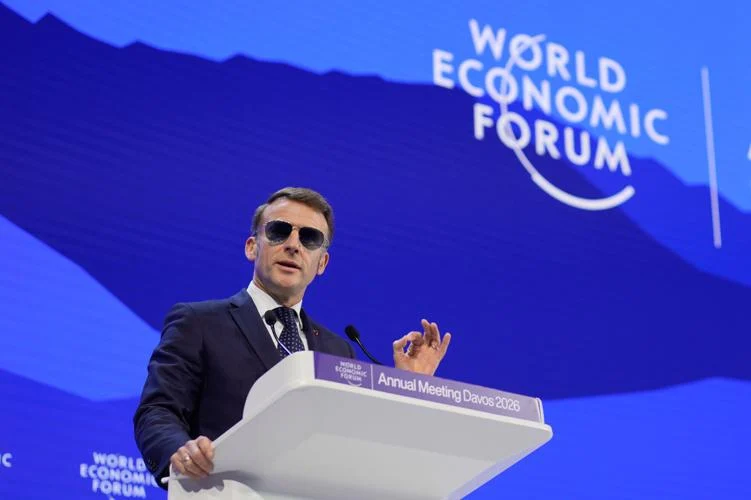
BRUSSELS – January 21, 2026 — The European Union entered intensive planning Tuesday to implement retaliatory tariffs potentially totaling $108 billion on American products, while Denmark made the unprecedented decision to boycott the World Economic Forum entirely in protest of President Trump’s demands for Greenland acquisition.
The Retaliation Scale
EU capitals are discussing one of the largest coordinated economic responses in European history:
| Retaliation Package | Value | Timeline | Status |
| Initial Tariffs | $108 billion | 30 days | Under discussion |
| Phased Escalation | Up to $200B | 90 days | Contingency plan |
| Anti-Coercion Instrument | Targeted sanctions | Immediate | Activation debated |
| Strategic Autonomy Measures | Trade diversification | Long-term | Being developed |
The $108 billion figure represents careful targeting of politically sensitive U.S. products to maximize pressure on Trump administration while minimizing harm to European consumers and businesses.
Denmark’s Historic Boycott
In an unprecedented diplomatic snub, Denmark declined World Economic Forum invitation, with no government representatives attending Davos 2026.
WEF spokesperson (Monday): “Danish government representatives were invited and decided not to attend. Any decisions on attendance are matter for government concerned. We can confirm Danish government will not be represented in Davos this week.”
The boycott underscores severity of diplomatic rupture. Denmark historically maintains strong presence at Davos, viewing it as critical platform for Nordic economic diplomacy.
Other Nordic Responses:
- Norway: Attending but PM received Trump message linking Greenland to Nobel Prize snub
- Sweden: PM Ulf Kristersson attending, vows “we will not allow ourselves to be blackmailed”
- Finland: President attending, emphasizing NATO solidarity with Denmark
- Iceland: Foreign Minister attending, expressing “grave concern”
The Anti-Coercion Instrument: Europe’s “Trade Bazooka”
Multiple European leaders called for activation of never-before-used Anti-Coercion Instrument (ACI)—designed precisely for scenarios where external states attempt economic coercion.
Bernd Lange, European Parliament Trade Committee Chairman: “The Anti-Coercion Instrument, designed precisely for such cases, must now be used.”
ACI Capabilities:
- Targeted tariffs on specific U.S. products
- Restrictions on U.S. company EU operations
- Exclusion from EU public procurement
- Suspension of cooperation agreements
- Coordinated multilayered sanctions
David van Weel, Netherlands Foreign Minister (Dutch TV interview): “It’s blackmail what he’s doing… and it’s not necessary. It doesn’t help the alliance [NATO], and it also doesn’t help Greenland.”
Targeted U.S. Products
EU strategists identifying products for maximum political impact:
Proposed Tariff Targets (Draft List):
| Product Category | Annual Trade | States Affected | Political Impact |
| Bourbon whiskey | $1.8B | Kentucky (McConnell) | High |
| Harley-Davidson motorcycles | $950M | Wisconsin (swing state) | High |
| Agricultural products | $18B | Midwest states | Very High |
| Tech hardware | $42B | California | High |
| Aerospace components | $12B | Washington, Texas | High |
| Pharmaceuticals | $23B | New Jersey, NC | Medium |
| Steel/Aluminum | $8B | Pennsylvania | High |
The targeting explicitly mirrors Trump’s own tariff strategy: identify products from politically important regions to create domestic pressure for policy reversal.
Unified European Response
European Commission President Ursula von der Leyen and European Council President Antonio Costa issued rare identical statements on X:
“Tariffs would undermine transatlantic relations and risk dangerous downward spiral. Europe will remain united, coordinated, and committed to upholding sovereignty.”
This unified messaging reflects years of EU work to present coherent front after Trump divided Europe during his first term by offering bilateral deals to individual countries.
Key European Leader Statements:
German Chancellor Olaf Scholz: Working with EU partners on “coordinated response” to “unacceptable” ultimatums.
French President Emmanuel Macron: “No intimidation nor threat will influence us. Tariff threats are unacceptable.”
Swedish PM Ulf Kristersson: “We will not allow ourselves to be blackmailed. Only Denmark and Greenland decide on issues concerning Denmark and Greenland.”
UK PM (post-Brexit but coordinating): “British government’s plan to hand over Chagos Islands sovereignty not subject to U.S. approval.”
Greenland’s Position: Absolutely Not for Sale
Greenlandic leaders have repeatedly and emphatically stated the territory is not for sale at any price:
Greenlandic Government Statement (January 19): “Greenland belongs to Greenlanders. We are not a commodity to be bought and sold. We will determine our own future through democratic self-determination, not external pressure or threats.”
Demonstrations Monday: Thousands marched in capital Nuuk protesting U.S. acquisition attempts. Protesters carried signs reading:
- “We Are Not For Sale”
- “Greenland Belongs to Greenlanders”
- “Respect Our Sovereignty”
- “Not Your Property, Trump”
Strategic Importance: Why Trump Wants Greenland
Trump’s interest isn’t purely rhetorical—Greenland holds genuine strategic value:
Military Importance:
- Thule Air Base (critical early-warning systems)
- Monitors Greenland-Iceland-UK gap (naval choke point)
- Shortest air routes between North America and Europe
- Arctic sovereignty amid Russian/Chinese expansion
Economic Value:
- Rare earth mineral deposits (essential for tech, defense)
- Estimated value: $1-2 trillion in recoverable minerals
- No current large-scale mining (environmental concerns)
- Climate change opening Arctic shipping lanes
Geopolitical Significance:
- Controls Arctic territory as region becomes more accessible
- Strategic positioning for 21st century great power competition
- Denies China potential Arctic foothold
However, these strategic interests don’t override Greenland’s right to self-determination or international norms against territorial coercion through economic threats.
Legal and Diplomatic Frameworks
Multiple international law frameworks prohibit Trump’s approach:
UN Charter Article 2(4): Prohibits threat or use of force against territorial integrity of any state.
NATO Treaty Article 5: Requires collective defense of member territories—including Greenland as part of Danish realm.
International Law Principle: Self-determination of peoples—Greenlanders must consent to any sovereignty change.
WTO Rules: Prohibit tariffs for political coercion unrelated to legitimate trade concerns.
European legal experts argue Trump’s tariff threats violate all these frameworks, potentially justifying referral to International Court of Justice or WTO dispute resolution.
Economic Impact Estimates
If both U.S. tariffs and EU retaliation are implemented:
Impact on U.S.:
- GDP growth: -0.4 to -0.6 percentage points (2026)
- Job losses: 250,000-400,000 (concentrated in export sectors)
- Consumer prices: +1.2-1.8% (tariffs passed through)
- Corporate earnings: -$85-120B (S&P 500 aggregate)
Impact on EU:
- GDP growth: -0.3 to -0.5 percentage points
- Job losses: 180,000-300,000
- Consumer prices: +0.8-1.2%
- Export sector contraction: 2.5-3.8%
Both economies would suffer, but economic pain creates political pressure—which is precisely the point of tariff warfare.
Business Community Concerns
Major corporations on both sides express alarm:
U.S. Business Roundtable (January 20): “Escalating trade tensions with Europe—our largest export market—threaten American jobs and economic growth. We urge diplomatic resolution.”
European Business Leaders (joint statement): “Transatlantic trade has been foundation of prosperity for both continents. Political disputes must not destroy economic relationships built over decades.”
Business leaders fear that once tariff spiral begins, it becomes politically difficult to de-escalate even after initial disputes are resolved.
What Happens in Davos
Today’s Trump speech at WEF represents potential inflection point:
Best Case (Low Probability): Trump softens rhetoric, signals willingness to negotiate, tensions ease. Markets rally, Europe pulls back retaliation plans.
Base Case (Medium Probability): Trump maintains position but avoids new escalation. Europe proceeds with planning but delays implementation. Situation remains tense but doesn’t immediately worsen.
Worst Case (Significant Probability): Trump doubles down, possibly adds new threats. Europe activates ACI, begins implementing tariffs. Trade war fully ignites, markets tumble further.
Trump’s scheduled bilateral meetings with European leaders this afternoon will be crucial. If he refuses to meet or meetings are unproductive, that signals worst-case trajectory.
Historical Parallels
European diplomats privately compare current situation to several historical precedents:
Suez Crisis (1956): U.S. pressure forced UK/France retreat from Egypt. However, then U.S. and UK/France were on same side of Cold War. Today’s context entirely different.
Iraq War (2003): Transatlantic rift over WMD claims. Took years to repair relationships. Current crisis potentially more severe as involves direct economic warfare.
Trump First Term (2017-2021): Persistent tensions but never escalated to this level. Tariffs were limited and mostly resolved. Greenland coercion unprecedented.
No perfect historical parallel exists. This represents new territory in post-WWII transatlantic relations.
Bottom Line
The Greenland crisis has evolved from unusual Trump rhetoric into full-blown transatlantic crisis with potential for lasting damage to Western alliance. Europe’s $108 billion retaliation package—if implemented—would represent largest EU trade action against U.S. in history.
Denmark’s Davos boycott sends unmistakable message: this isn’t business as usual that can be smoothed over with diplomatic niceties. European patience with Trump’s unorthodox methods has reached breaking point.
Next 24-48 hours critical. Trump’s Davos remarks and subsequent bilateral meetings will determine whether this crisis can be contained through diplomacy or will spiral into protracted trade war between history’s closest allies.
Stakes couldn’t be higher—for markets, for NATO cohesion, for Western unity in face of authoritarian challenges from China and Russia. At moment when democratic world needs solidarity, Trump’s Greenland gambit risks fracturing relationships that have underpinned global order for 75 years.