Trump’s Venezuela Gambit: Us Military Captures Maduro in Unprecedented Hemisphere Operation
GEOPOLITICS & FOREIGN POLICY | EXCLUSIVE ANALYSIS
In a dramatic display of American military power that has sent shockwaves across Latin America and global diplomatic circles, President Donald Trump announced Saturday that US special forces successfully captured Venezuelan President Nicolás Maduro and First Lady Cilia Flores, flying them to New York to face narcoterrorism charges under newly unsealed federal indictments.
The operation, conducted without prior Congressional notification, marks the most aggressive US military intervention in the Western Hemisphere since the 1989 invasion of Panama and signals a potential paradigm shift in American foreign policy under Trump’s second administration.
Operation Details
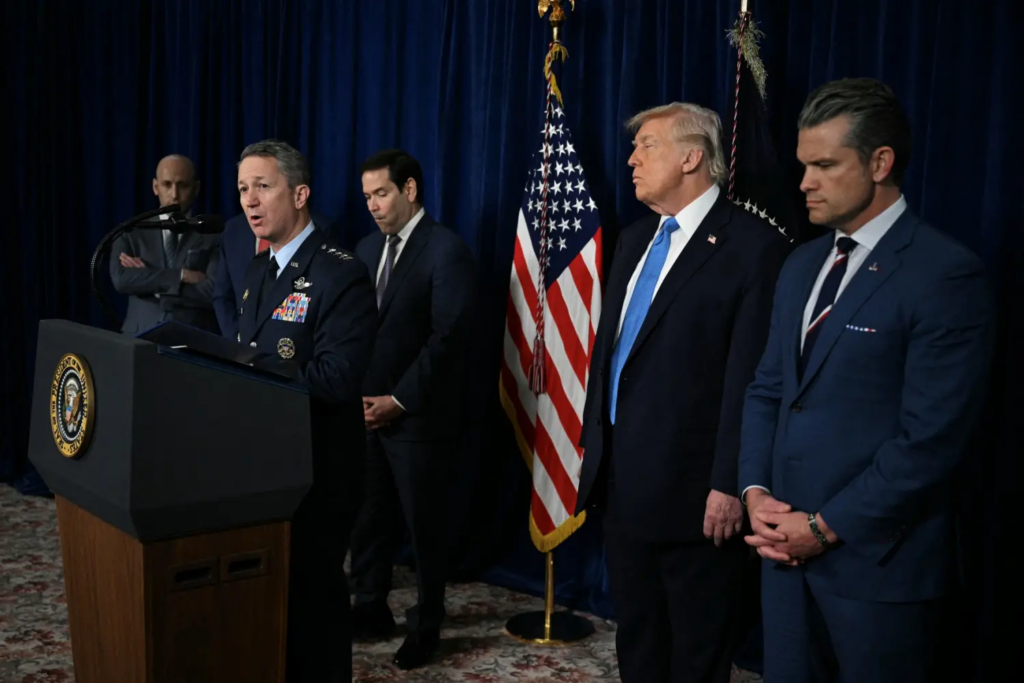
Speaking from his Mar-a-Lago estate in a hastily arranged press conference alongside Secretary of State Marco Rubio, Trump declared the United States would “run the country until such time as we can do a safe, proper and judicious transition.” The president confirmed that Venezuelan Vice President Delcy Rodríguez was sworn in as interim president and has expressed willingness to cooperate with Washington’s reconstruction plans.
| Venezuela Operation Facts | Details |
| Operation date | January 3, 2026 |
| Primary targets | Maduro, Cilia Flores |
| Casualties | Undisclosed |
| Congressional notification | None provided |
| Interim Venezuelan leader | Delcy Rodríguez (VP) |
| Legal basis | Narcoterrorism indictments |
Legal and Constitutional Questions
The operation’s legality faces intense scrutiny from constitutional scholars and Congressional Democrats. The administration provided no advance notice to Congress, bucking both legal requirements and historical precedent for military operations. Senator Tim Kaine (D-VA) sharply criticized the move, stating “Maduro is terrible. But Trump put American servicemembers at risk with this unauthorized attack.”
Senate Majority Leader John Thune (R-SD) praised the operation as “decisive action,” highlighting the partisan divide over Trump’s increasingly unilateral approach to presidential authority.
Justice Department Charges
The newly unsealed federal indictments charge Maduro and Flores with cocaine trafficking conspiracy, engaging in a criminal enterprise, and narcoterrorism. Prosecutors allege the Venezuelan leadership facilitated cocaine shipments to the United States, though specific evidentiary details remain sealed.
Trump made the controversial claim that Maduro “sent tens of thousands” of Venezuelan prison gang Tren de Aragua members to the United States. However, a National Intelligence Council report from April contradicts this assertion, stating: “While Venezuela’s permissive environment enables [Tren de Aragua] to operate, the Maduro regime probably does not have a policy of cooperating with TDA and is not directing TDA movement to and operations in the United States.”
Regional and Global Implications
The Venezuelan operation fundamentally reshapes hemispheric relations and raises profound questions about spheres of influence in the 21st century. Atlantic Council analysts note that Trump’s approach to Venezuela will “do much to define US foreign policy in 2026,” particularly regarding how America balances interventionism with respect for sovereignty.
Critical questions emerge: Can Trump stabilize Venezuela without engaging in nation-building he philosophically opposes? Will reliance on Delcy Rodríguez—Maduro’s former vice president rather than recognized opposition leaders—undermine democratic legitimacy? Could this operation signal to China and Russia an American endorsement of “spheres of influence” that might encourage their own regional ambitions?
| Potential Outcomes | Probability Assessment |
| Stable democratic transition | Low-Medium |
| Extended US occupation | Medium-High |
| Opposition government installation | Medium |
| Regional military escalation | Low-Medium |
| Increased authoritarianism elsewhere | High |
Oil and Economic Dimensions
Venezuela possesses the world’s largest proven crude oil reserves, estimated at approximately 300 billion barrels. Trump announced that revenue from Venezuelan oil sales would be used to purchase American products, suggesting an economic reconstruction plan tied to US commercial interests.
The Trump administration has struck at least 32 vessels in the Caribbean Sea and Eastern Pacific Ocean since September, claiming they carried drugs destined for the United States. However, experts on Venezuelan drug trafficking told PolitiFact the country plays a relatively minor role in narcotics reaching America, and the administration has provided no evidence about drug quantities allegedly destroyed.
International Reactions
The operation drew swift international condemnation and support along predictable ideological lines. Russian and Chinese officials denounced the intervention as “illegal aggression,” while several Latin American governments expressed concern about sovereignty violations. Colombian President expressed cautious support, recognizing the Maduro regime’s brutality while questioning the intervention’s legality.
Ali Larijani, a senior Iranian official, warned: “Trump should know that US interference in this internal matter would mean destabilizing the entire region and destroying America’s interests,” drawing an explicit parallel between Venezuelan intervention and potential actions elsewhere.
Long-Term Strategic Questions
Historical parallels to America’s troubled interventions in Iraq, Afghanistan, and other nations loom large. Trump’s stated opposition to nation-building conflicts with the massive undertaking required to rebuild Venezuela’s shattered economy, decimated infrastructure, and fractured political system.
Venezuela’s GDP contracted approximately 80% between 2013 and 2022 under Maduro’s rule, representing one of modern history’s worst economic collapses outside wartime. Reconstruction will require hundreds of billions of dollars in investment, technical expertise, and sustained political commitment—resources and attention Trump may prove unwilling to provide.
| Venezuela Reconstruction Needs | Estimated Cost/Scope |
| Infrastructure rebuilding | $150-200 billion |
| Democratic institution building | 5-10 years |
| Oil sector restoration | $50-75 billion |
| Humanitarian assistance | $20-30 billion annually |
| Security sector reform | $10-15 billion |
As the Trump administration begins implementing its Venezuelan policy, the world watches to determine whether this represents a sustainable model for American hemispheric leadership or another foreign policy overreach that will ultimately undermine US credibility and strategic objectives.